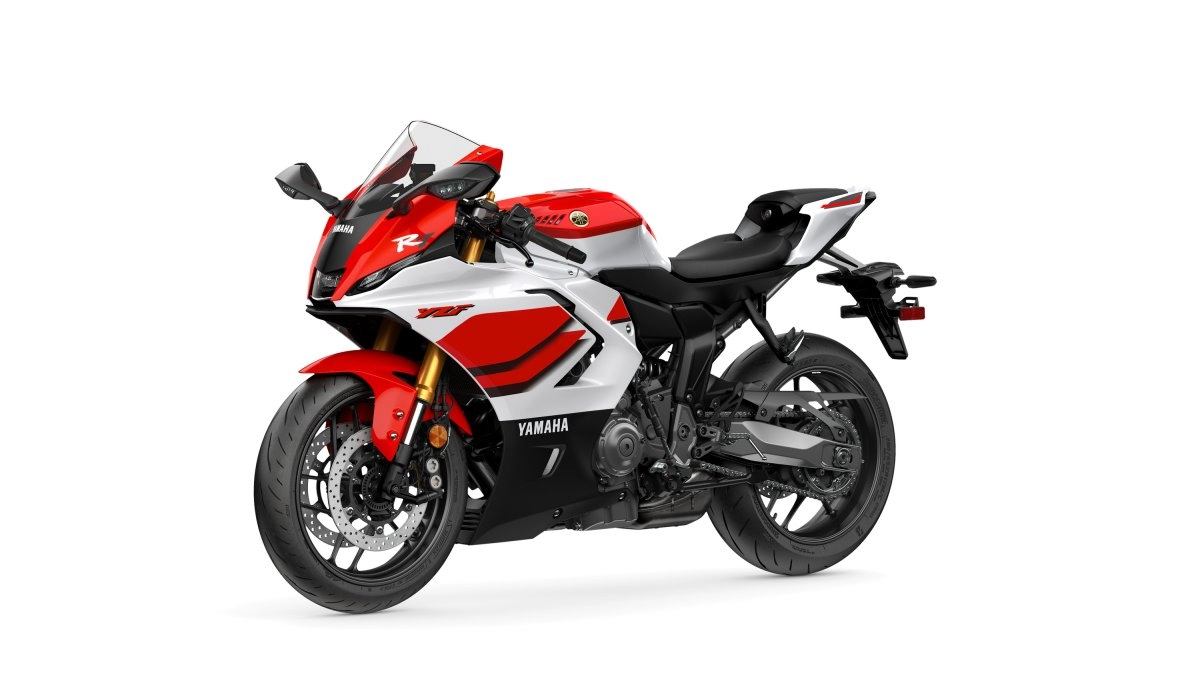
Yamaha R7
Expected On-road price: ₹9.80L – ₹11.20L (approx)
Engine: 689cc CP2 Twin
Power: 73.4 PS
Mileage: 22 km/l
Top Speed: 230 km/h
Gearbox: 6 Speed
ABS: Dual Channel
Yamaha R7 Price (Expected Variants)
| Variant | Ex-showroom | On-road price |
|---|---|---|
| Standard | ₹9,10,000 | ₹9,80,000 |
| Quickshifter Edition | ₹9,45,000 | ₹10,20,000 |
| MotoGP Edition | ₹10,30,000 | ₹11,20,000 |
The Ride: Yamaha R7 Experience
The Yamaha R7 is built for riders who want real supersport DNA without the brutal aggression of a liter bike. Fire up the legendary CP2 parallel-twin and you instantly feel its punchy mid-range torque. Unlike screaming inline-fours, the R7 feels muscular from low RPMs, making city rides and canyon runs equally exciting.
Its lightweight chassis and aggressive clip-on ergonomics make every corner feel precise. The bike loves twisties, delivering confidence through KYB suspension and razor-sharp handling. On highways, the aerodynamic fairing and linear powerband make it practical enough for long rides while still offering thrilling acceleration.
Technical Specifications
| Engine Type | 689cc, Liquid-cooled, DOHC, Parallel-Twin (CP2) |
|---|---|
| Displacement | 689 cc |
| Max Power | 73.4 PS @ 8750 rpm |
| Max Torque | 67 Nm @ 6500 rpm |
| Cylinders | 2 |
| Cooling System | Liquid Cooled |
| Fuel System | Fuel Injection |
| Transmission | 6 speed with Assist & Slipper Clutch |
| Frame | Lightweight steel frame |
| Front Suspension | 41mm KYB USD forks |
| Rear Suspension | Monocross rear shock |
| Front Brake | Dual 298mm discs |
| Rear Brake | 245mm disc |
| ABS | Dual Channel ABS |
| Fuel Tank | 13 litres |
| Mileage | 20 – 24 km/l approx |
| Top Speed | 230 km/h |
| Kerb Weight | 188 kg |
| Seat Height | 835 mm |
Is the Yamaha R7 for You?
- Riders upgrading from R3, Ninja 300, or RC 390
- Track-day enthusiasts wanting sharp supersport handling
- Daily riders wanting performance without liter-bike heat
- Yamaha fans who love R-series styling
- Buyers wanting usable torque over peaky top-end madness
What You'll Love
- CP2 engine delivers explosive mid-range torque
- Excellent balance of street + track usability
- Aggressive R1-inspired styling
- Premium KYB suspension setup
- More manageable than 600cc inline-four supersports
Real Talk: Things to Consider
- Not as powerful as ZX-6R or CBR650R
- Committed riding posture for daily traffic
- Smaller 13L tank limits touring range
- Expected premium pricing in India
Yamaha R7 Performance Overview
The R7 hits the sweet spot between beginner-friendly and serious sportbike. It offers enough power for thrilling highway pulls while remaining approachable for riders moving up the performance ladder.
Yamaha R7 Fuel Range
With a 13L fuel tank and 22 km/l average, expect around 250–280 km practical range.
Yamaha R7 Ergonomics
Sporty and aggressive, but less punishing than race-bred 600cc supersports.
Modern Tech Highlights
Assist & slipper clutch, optional quickshifter, lightweight chassis, and Yamaha’s race-bred handling package.
Yamaha R7 Performance Scorecard
Frequently Asked Questions (FAQs)
1. Is Yamaha R7 officially available in India?
As of now, the Yamaha R7 is primarily discussed as an expected or premium-import motorcycle for India rather than a mass-market showroom model. This makes it highly searched for expected pricing, launch updates, and future Yamaha plans.
2. Is Yamaha R7 better than Kawasaki Ninja 650?
The Yamaha R7 is sharper, more aggressive, and more track-focused, while the Ninja 650 is more comfortable and practical for everyday use. If you want sportier handling, R7 wins. If comfort matters more, Ninja 650 may suit better.
3. What is Yamaha R7 top speed and mileage?
The Yamaha R7 offers a top speed of around 230 km/h and delivers approximately 20–24 km/l depending on riding habits, road conditions, and throttle usage.
4. Is Yamaha R7 beginner friendly?
The R7 is better for intermediate riders upgrading from smaller sport bikes like the Yamaha R3 or KTM RC 390. It is manageable, but its aggressive ergonomics and performance demand confidence.
5. Why is Yamaha R7 good for SEO traffic?
Because the R7 attracts both dream-bike enthusiasts and practical sportbike buyers. Searches around price, launch date, specs, and comparisons create strong organic traffic potential.
6. Which bikes compete with Yamaha R7?
Key rivals include Kawasaki Ninja 650, Honda CBR650R, Aprilia RS 660, and in some comparisons, Kawasaki ZX-6R.
The Competition
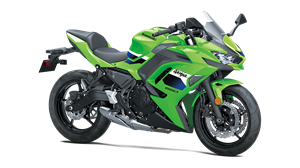
Expert Comparison
The Ninja 650 is more relaxed and beginner-friendly, but the R7 feels sharper and more track-focused.
Against the Honda CBR650R, the R7 trades top-end scream for lighter weight and stronger mid-range usability.
For riders wanting a true Yamaha supersport identity with everyday usability, the R7 stands out as one of the smartest choices.